
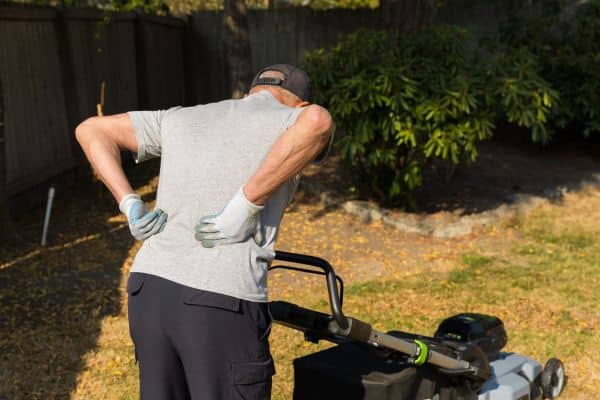
Warm weather often means more time outside mowing the lawn, gardening, landscaping, painting, or tackling home improvement projects. While these activities can keep you moving, repeated bending, lifting, twisting, and carrying can also place additional stress on your back.
A little soreness after a busy weekend may improve with rest, but back pain from yard work that is severe, persistent, or accompanied by other symptoms may require medical attention. At OSMC, our orthopedic specialists help patients throughout Northern Indiana and the Michiana area identify the cause of back pain and find an appropriate path toward recovery.
Why Does My Back Hurt After Yard Work?
Yard work frequently combines movements that can strain the muscles and other structures supporting the spine. Pulling weeds may keep you bent forward for extended periods, while shoveling mulch or soil combines lifting with twisting. Moving patio furniture, carrying landscaping materials, and operating lawn equipment can place additional stress on the lower back.
Lower back pain after gardening may simply be related to muscle soreness or a strain, particularly when you suddenly perform more physical activity than your body is accustomed to.
However, not every case of back pain is caused by a pulled muscle. Problems involving spinal discs, joints, or nerves can produce similar symptoms.
Is It a Back Strain or Something More Serious?
A back muscle strain can occur when muscles or tendons are overstretched or injured. Symptoms may include localized pain, stiffness, muscle spasms, and discomfort that increases with certain movements.
Nerve-related problems can feel different. For example, irritation or compression of the sciatic nerve may cause pain that travels from the lower back or buttock into the leg. Numbness, tingling, or weakness may also occur.
A herniated disc and other spinal conditions can also cause persistent lower back pain. Because different back conditions can produce overlapping symptoms, an orthopedic evaluation may be helpful when pain does not improve as expected.
When Should I See a Doctor for Back Pain?
Consider seeing an orthopedic back specialist when pain is severe, continues despite conservative care, repeatedly returns, or interferes with walking, sleeping, working, or normal daily activities.
Seek prompt medical attention if back pain follows a significant fall or accident or is accompanied by progressive weakness or numbness. Loss of bladder or bowel control or numbness around the groin or saddle area requires immediate emergency evaluation; seek treatment at a non-orthopedic urgent care or emergency room.
These symptoms should not be treated as ordinary soreness from gardening or home projects.
How Can I Prevent Back Pain While Gardening and Doing Yard Work?
Good body mechanics can help reduce unnecessary stress on your spine. Instead of bending at the waist to lift heavy objects, bend your knees and keep the load close to your body. Avoid twisting while carrying something heavy, and ask for assistance with objects that are difficult to safely move.
Changing positions frequently can also help. Take breaks from prolonged bending or kneeling, divide larger projects into shorter sessions, and gradually increase activity if you have been less active during the winter or spring.
Back Pain Treatment at OSMC
Treatment for back pain depends on its underlying cause and severity. Depending on your diagnosis, care may include activity modification, medication, physical therapy, pain management, or other nonsurgical and surgical treatment options.
At OSMC, patients have access to orthopedic care, spine specialists, diagnostic services, and physical therapy throughout the Michiana area.
Summer projects should leave you enjoying the results—not dealing with ongoing back pain. If pain after gardening, landscaping, or home improvement projects isn’t getting better, schedule an appointment with OSMC to have your symptoms evaluated and discuss your treatment options.